Somni
Stanford Capstone
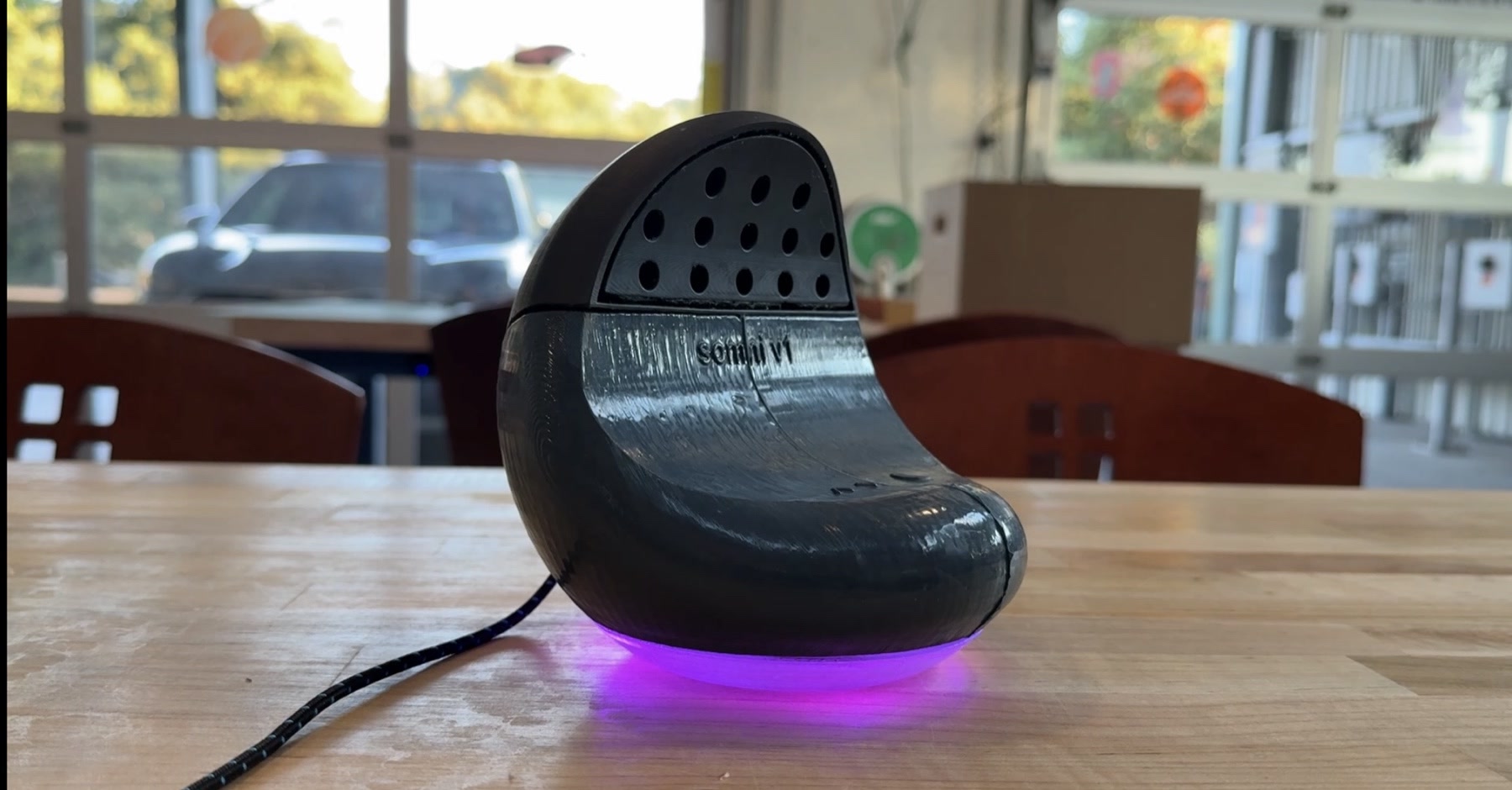
A bedside device that captures your dream the instant you wake up. Somni listens for your alarm, lights a soft ring of LEDs, records you narrating the dream, and pushes a transcript, analysis, and AI generated images of the dream to a companion app before your coffee finishes brewing.
Date
2026
Course
Design 161B (Senior Capstone)
Role
Hardware Engineering
Firmware
Full-Stack
Project Management
The idea
Dreams fade fast. Within thirty seconds of waking up most of the story is already gone. Within a minute, only fragments remain. A notebook on your nightstand or a phone app introduces enough friction to lose the dream entirely. Somni lands inside the first ten second window, before the cognitive cost of unlocking a phone or reaching for a pen.
The goal is to make dream journaling frictionless, then use the captured data to surface patterns the dreamer would never notice on their own.
Why every second matters
Dream recall accuracy drops on a steep curve in the seconds after waking. The deeper you get into the morning routine, the less of the dream is recoverable.
Somni
Captured in the first ten seconds, recall at its peak, zero distractions.
Notebook journaling
Fumbling for a pen, key details already slipping away.
Dream journal app
Unlock, tap, type. The distraction erases the most.
The flow
How it works
You wake up
Your alarm goes off. The instant your eyes open the clock starts, and the dream begins to fade.
Somni wakes with you
Somni recognizes your alarm and answers with a soft chime and a glowing ring of LEDs, letting you know it is awake and actively listening.
You speak, Somni captures
Speak your dream whenever you are ready. Somni stops listening, registers it, and pushes everything to the app. By the time you have had your coffee, the transcript, analytics, patterns, and AI generated images of the dream are waiting for you.
The hardware
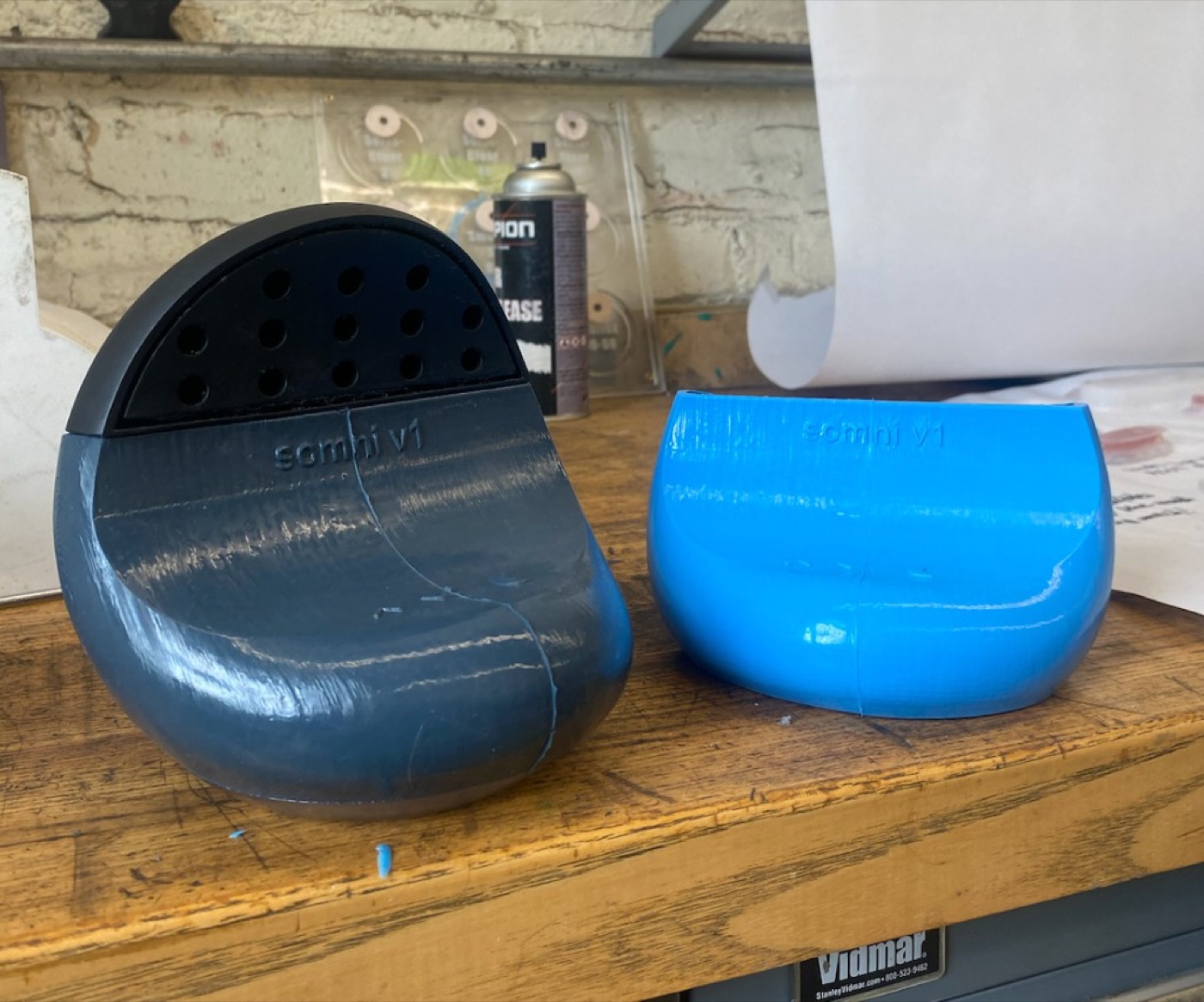
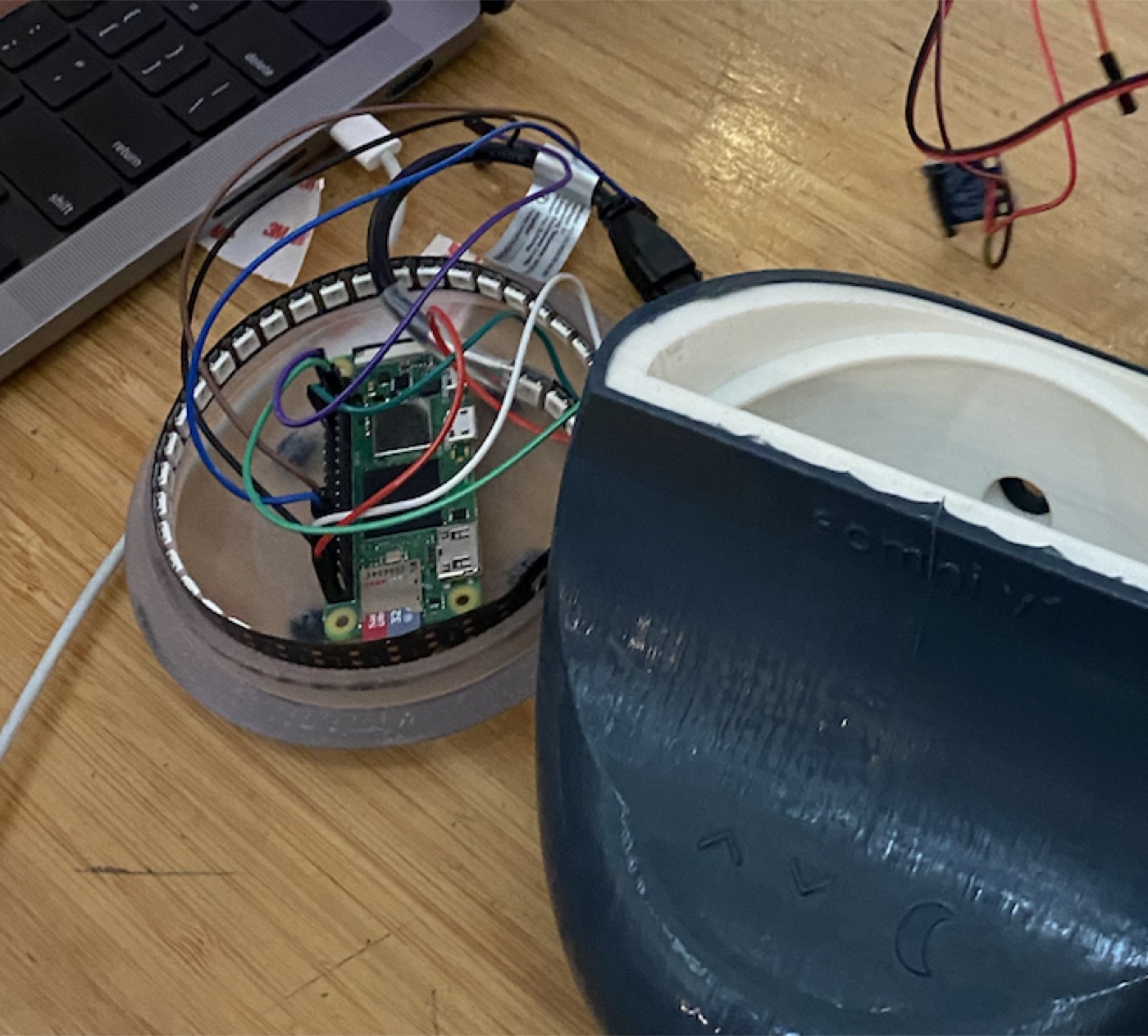
A Raspberry Pi Zero 2 W drives a 40 LED ring, a USB microphone, and a momentary button inside a 3D printed crescent moon enclosure. The shell went through sand cast, resin, and printed iterations before landing on the current form. The electronics breakdown below shows the base after wiring up the LED data line, capacitive touch sensor, and power.
The companion app
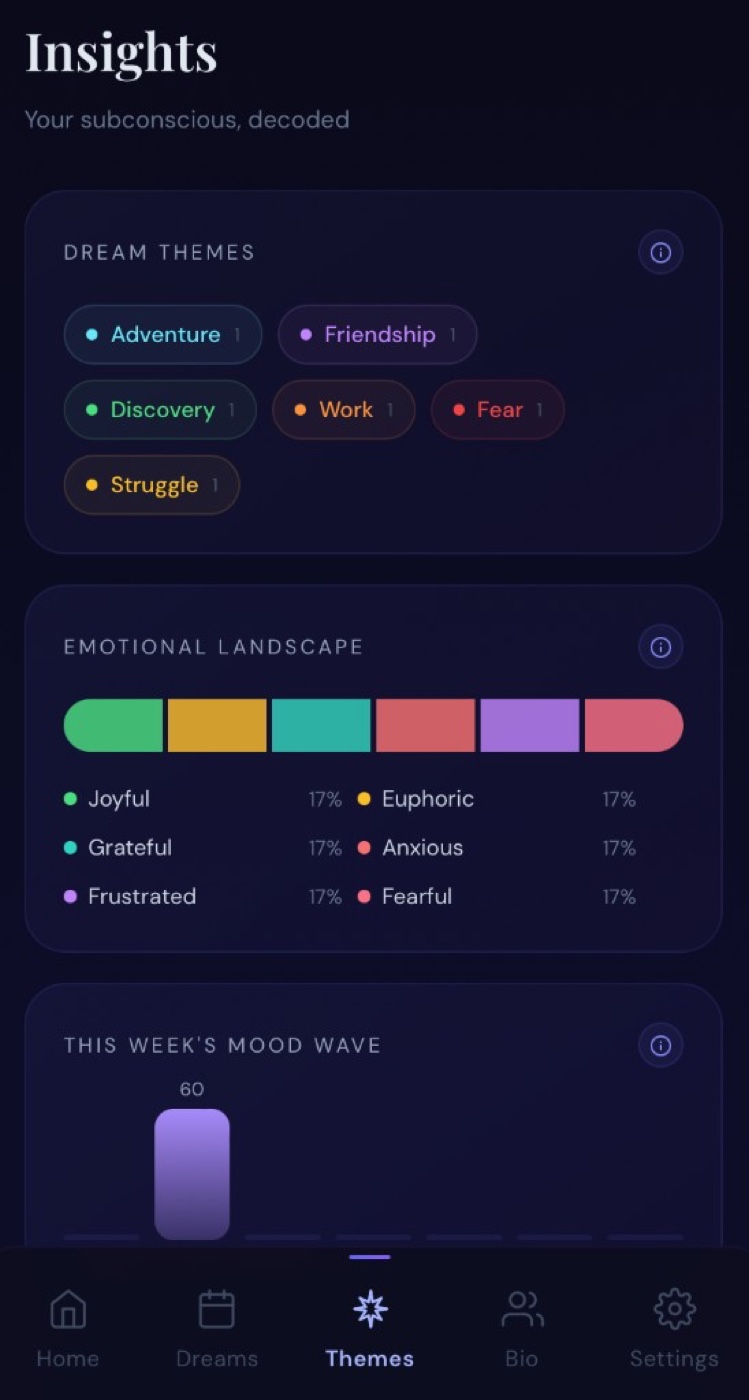
Every dream is transcribed with OpenAI Whisper, analyzed with Claude for themes, emotions, lucidity, and recurring symbols, then synced to a React PWA backed by Supabase. The app surfaces the dream history as a calendar, a theme graph, and a people graph built from everyone the dreamer mentions across dreams.
Status
V1 is functional end to end. Alarm detection, recording, transcription, analysis, and upload all work in a real bedroom on real sleep. The companion app is live in the App Store review queue. V2 is in design with the upgraded form factor, a built in speaker for chimes, and a capacitive touch surface for manual controls.